
Last updated November 15, 2026
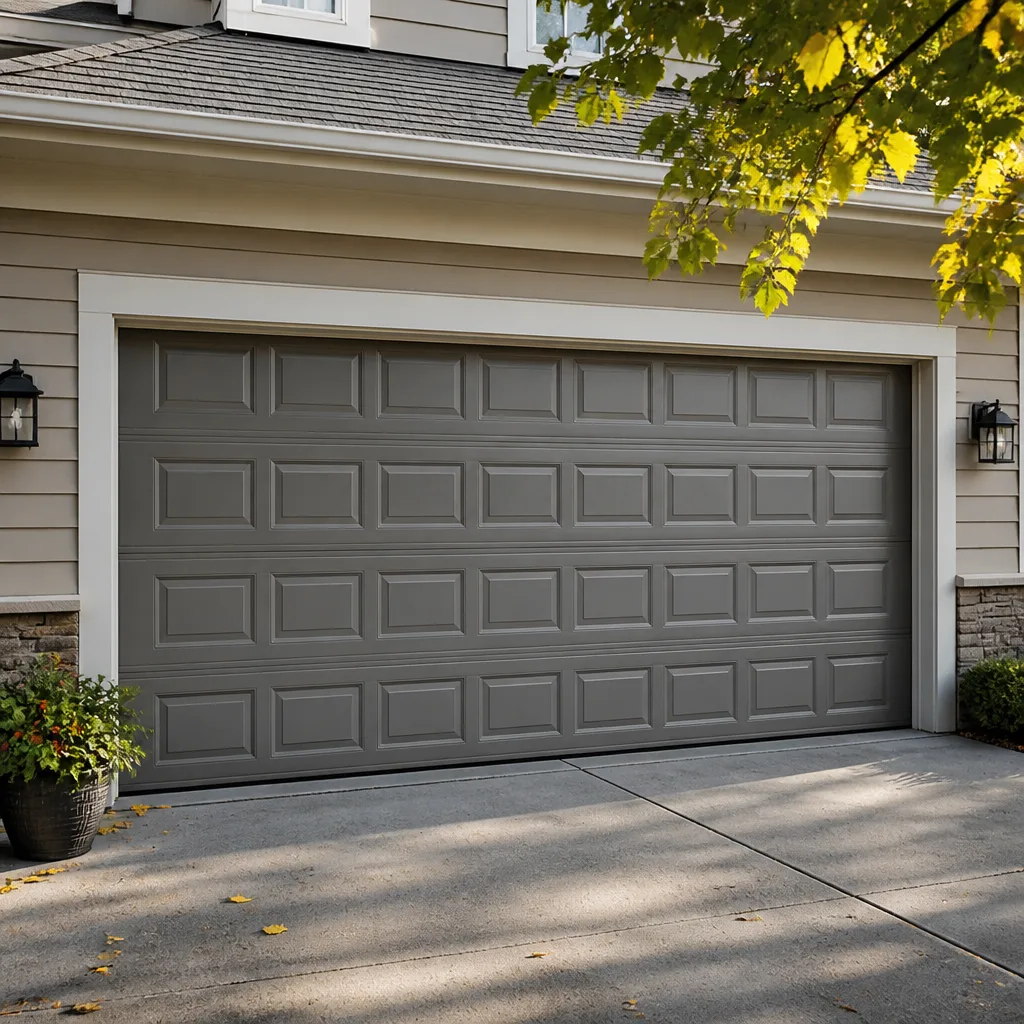 Raised-panel steel
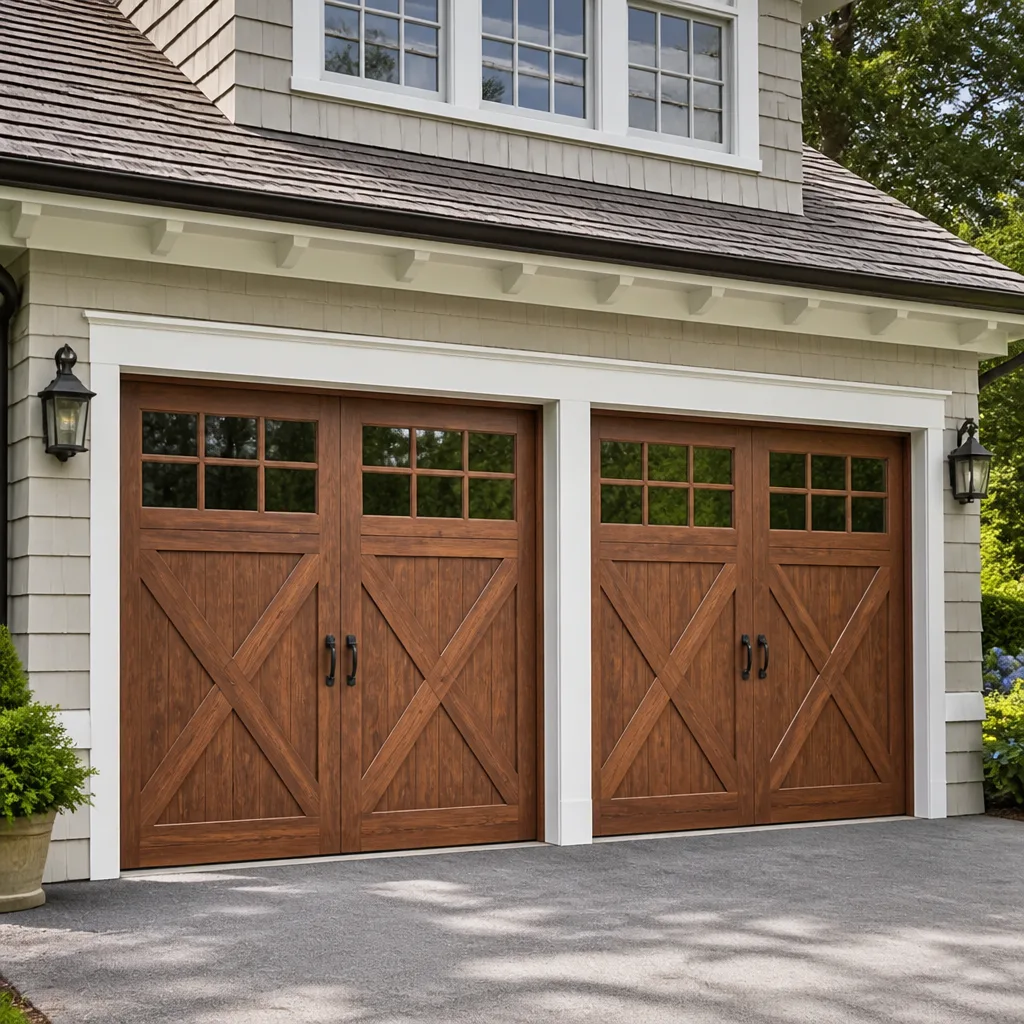 Carriage house
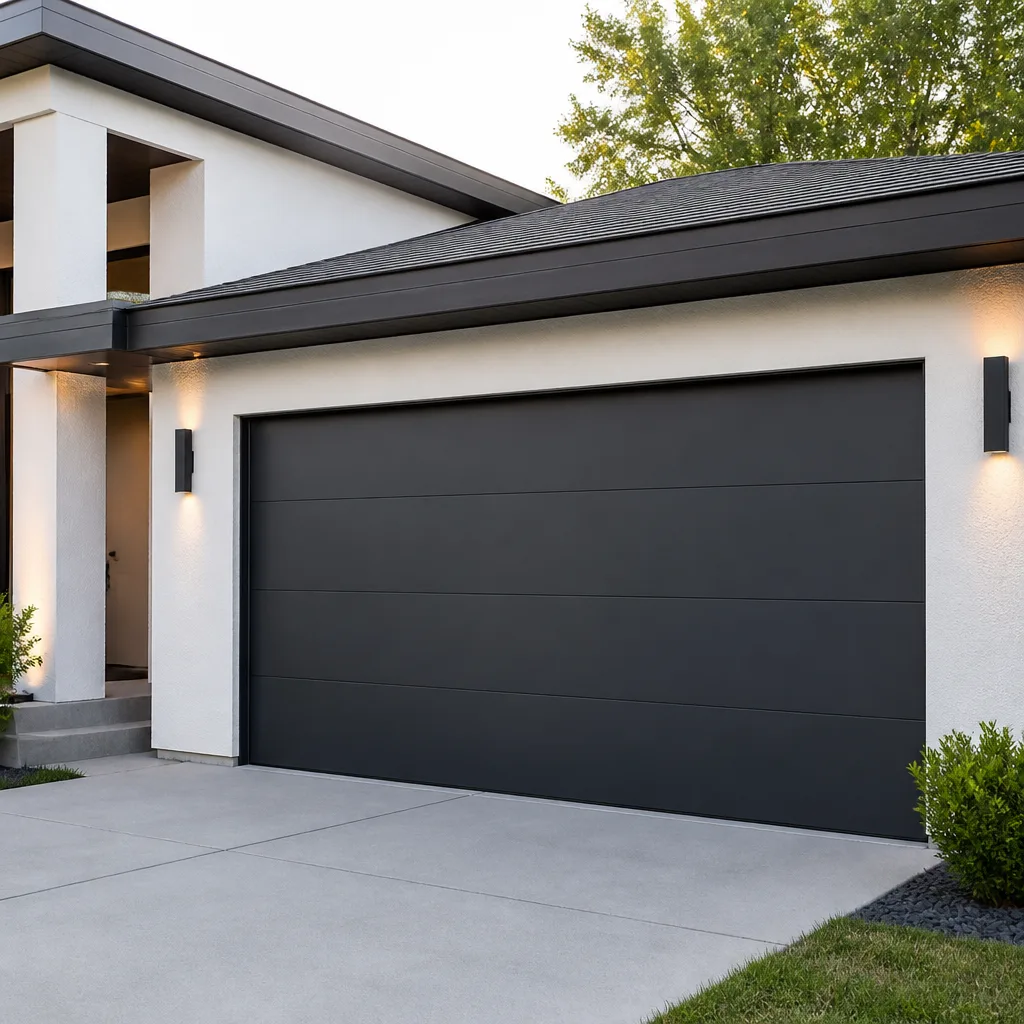 Modern flush
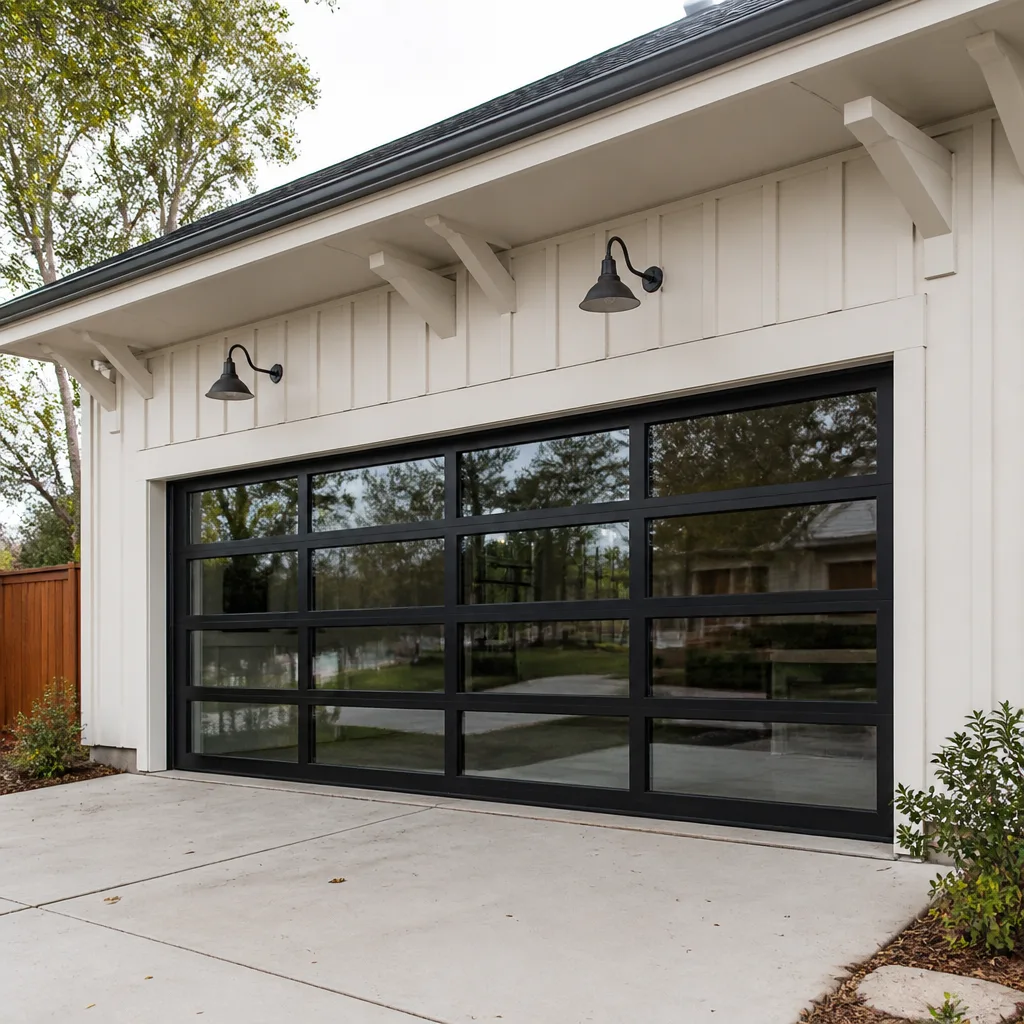 Full-view glass
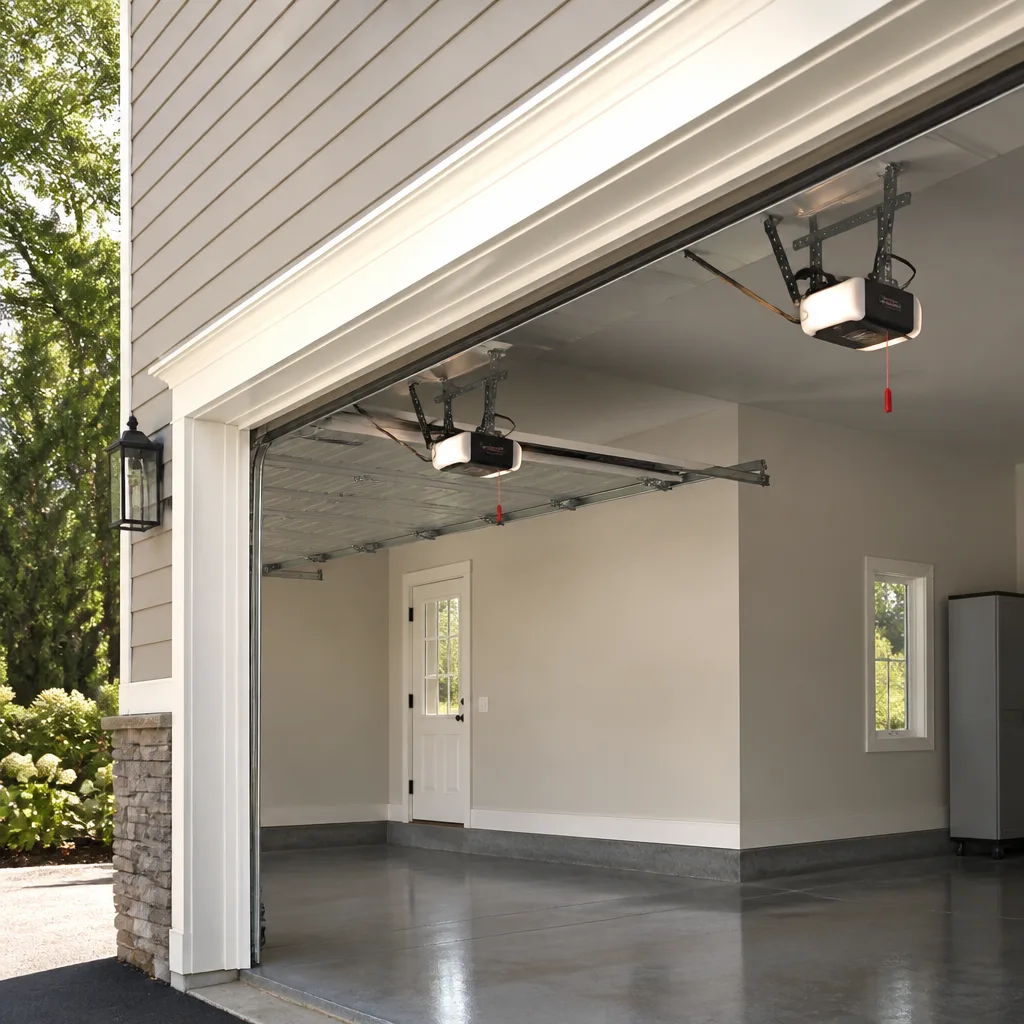 LiftMaster openers
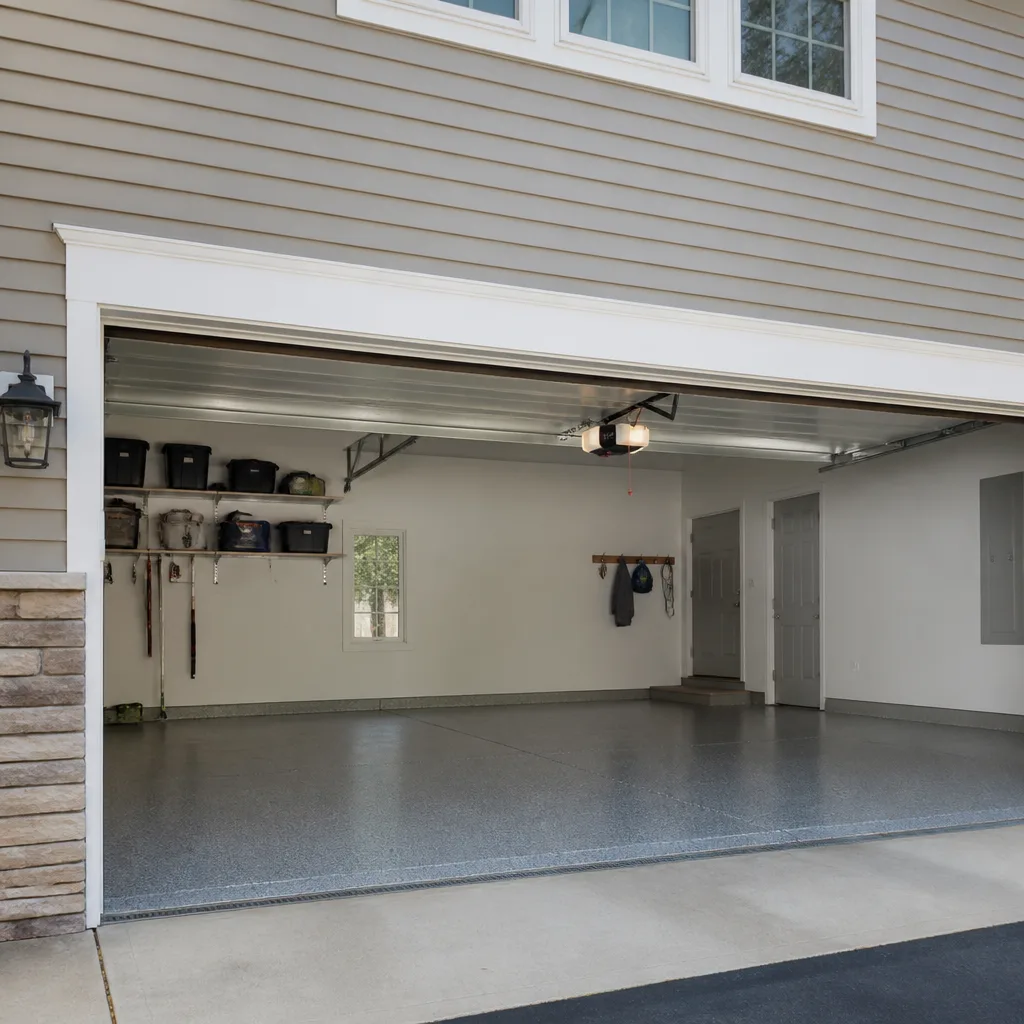 Chamberlain openers
Full 25-point door and opener safety check with every visit - springs, cables, rollers, tracks, and your LiftMaster or Chamberlain opener included
You get a price before we start. It does not change when the pro arrives.
Get your free estimateGarage Door Emergency Preparedness Guide for Hialeah Homes
Most garage door emergency advice assumes you have time to make a phone call and wait. In Hialeah, that assumption breaks down twice a year: once when a spring snaps on a Tuesday morning and your car is trapped inside, and once when a hurricane warning goes up and every garage door in the neighborhood suddenly matters more than it did the day before. Those are two different emergencies with two different responses. One is a mechanical problem that needs a technician. The other is a preparedness problem that needs a plan you’ve already practiced. This guide covers both, from the manual release procedure that gets your car out when the power is gone, to the decision framework for what counts as a real emergency and what can safely wait until morning. If you live in Hialeah and own a garage door, this is the page to bookmark before you need it.
Quick Answer
A garage door emergency in Hialeah falls into one of two categories: a mechanical failure (broken spring, snapped cable, dead opener, door stuck open or closed) or a storm-related failure during hurricane season. For mechanical failures, the first step is to use the manual release cord to disengage the opener so you can move the door by hand, then call a specialist. For storm situations, secure the door before the storm arrives rather than during it, and treat a door that won’t close as a security priority. Testing your manual release and door balance before hurricane season starts is the single most useful preparedness step a Hialeah homeowner can take.
Styles & brands we work with
- Raised-panel steel
- Carriage house
- Modern flush
- Full-view glass
- LiftMaster openers
- Chamberlain openers
Table of Contents
- How Do You Get Your Car Out When the Opener Fails and the Power Is Out?
- The Two Kinds of Garage Door Emergency in Hialeah
- What Counts as a True Emergency vs. What Can Wait Until Morning
- Pre-Storm Preparation: Why You Test in May, Not in August
- How to Secure a Partially Open or Damaged Door Before Help Arrives
- Improvised Bracing vs. Calling for Emergency Service
- What Hurricane Season Actually Does to Hialeah Garage Doors
- When to Call a Professional
How Do You Get Your Car Out When the Opener Fails and the Power Is Out?
You pull the manual release cord hanging from the opener trolley, disengage the door from the motor, and lift the door by hand. That’s the whole procedure in one sentence. The part that matters is whether you’ve done it before, because a garage door that’s been sitting on a dead opener for two years can behave very differently than one you tested last month.
Here’s the sequence, in order:
- Confirm the door is fully closed and nothing is underneath it. Look under the door, check the tracks, and make sure no one is standing in the path. A disengaged door is dead weight and it will come down fast.
- Find the release cord. On most LiftMaster and Chamberlain openers, it’s the red-handled rope hanging from the trolley that rides the rail. On Genie and Raynor units it may be a different color or a lever, but it’s always near the trolley.
- Pull straight down and toward the door until the trolley clicks free. You’ll feel it release. If it resists, don’t yank; the door may be under tension from a broken spring or a jammed trolley, and forcing it can damage the carriage.
- Lift the door slowly by hand. A properly balanced door lifts with one hand. If it feels heavy, won’t budge, or slams down when you release it, the springs or cables are compromised. Stop and don’t force it.
- Prop the door open before you drive out if you can’t hold it yourself, or have a second person hold it. Never drive under a door that’s being held up by hand alone if there’s any question about the spring condition.
- Re-engage the trolley when power returns by pulling the cord again or running the opener until it reconnects. Test the door with the wall button before you rely on it.
Practice this once, in daylight, when nothing is wrong. That’s the whole point. During a hurricane evacuation order or a power outage, you don’t want to be reading a manual release procedure for the first time by flashlight. This is the kind of preparation that costs you ten minutes in May and saves you an hour of panic in September.
The Two Kinds of Garage Door Emergency in Hialeah
In our experience, Hialeah homeowners call about two situations that look similar on the phone but need completely different responses. Treating them the same is where people get into trouble.
The mechanical emergency is the everyday kind. A torsion spring breaks, a cable snaps, the opener motor dies, the door comes off one track and hangs crooked, or the door won’t close because the safety sensors are misaligned. These happen year-round in Hialeah, usually on a hot afternoon when the door has cycled a few times and the metal has expanded. The car is trapped or the house is open. The response is a same-day repair call, and the fix is almost always a repair rather than a replacement.
The storm emergency is seasonal and it’s a different animal entirely. During hurricane season, which runs June through November, the garage door becomes the largest opening in the wind envelope of the house. A door that isn’t braced, or one that fails during a storm, can leave the home exposed to wind-driven rain and debris. The response here isn’t a repair call at 2am. It’s a pre-season inspection, a manual release test, and a plan for what you’ll do if the door fails while the storm is happening.
The mistake we see most often is treating the storm emergency like the mechanical one. You can’t call a technician during a hurricane and expect a truck in the driveway. The time to solve a storm problem is before the storm, not during it. That means testing your release, checking your door balance, and knowing how to brace the door yourself if it fails while the wind is up. Mechanical problems get a phone call. Storm problems get a plan.
What Counts as a True Emergency vs. What Can Wait Until Morning
A true garage door emergency is one where someone is in danger, the home is exposed to weather or intruders, or a vehicle is trapped and needed. Everything else can wait for the next service window. Here’s how to sort the two.
Call now:
- The door is stuck open and won’t close, leaving the house unsecured.
- A spring or cable has broken and the door is hanging under tension or off its track.
- The door came down on something and the panels are bent or the tracks are twisted.
- The opener is making a grinding or burning smell, or the door reverses unpredictably when closing.
- A car is trapped inside and you need it for work, a medical appointment, or an evacuation.
Can wait for the next dispatch window:
- The opener is noisy but the door still cycles normally.
- A remote or keypad stopped working but the wall button still operates the door.
- The door closes but the safety sensors need realignment.
- Cosmetic damage to panels that doesn’t affect operation or security.
- A single torsion spring on a two-spring system has broken but the door still lifts (schedule it, don’t ignore it; the second spring is now carrying double the load).
A note on timing: the phone line is open at any hour, and dispatch runs from 7am to 7pm, Sunday through Friday. If you call outside dispatch hours, we book you into the next opening. That’s the honest answer, and it’s why the emergency list above is short. Most of what feels like a crisis at 11pm can be secured and handled in the morning. The exceptions are the ones where the house is open or someone’s safety is at stake, and those are the ones worth calling about.
Pre-Storm Preparation: Why You Test in May, Not in August
Hurricane season in South Florida runs June through November, and the time to test your garage door is the month before it starts, not the week the forecast turns. A door that fails the balance test in May is a door you can schedule a repair for. A door that fails the balance test two days before a storm makes landfall is a door you’re bracing with lumber and hoping.
Here’s the pre-season checklist we recommend to Hialeah homeowners:
- Test the manual release. Pull the cord, disengage the door, lift it by hand, and see how it behaves. If it’s heavy or slams, the springs need attention before the season.
- Check the balance. Raise the door halfway and let go. A balanced door stays put. A door that drifts down or shoots up is out of balance and needs adjustment.
- Inspect the springs and cables. Look for gaps in the torsion spring coils, fraying on the cables, and rust at the drums. Don’t touch the springs themselves. They’re under high tension and can cause serious injury. Look, don’t adjust.
- Test the safety reverse. Put a piece of wood flat on the floor in the door’s path and close it. The door should reverse on contact. If it doesn’t, the opener’s safety system needs service.
- Check the weather seal. The bottom seal on a Hialeah garage door takes a beating from heat and rain. A worn seal lets water in and lets wind-driven rain push past the door frame during a storm.
- Clear the tracks. Debris, leaves, and the occasional lizard in the track will bind the door. Clean them and check that the door rolls smoothly by hand.
If any of these checks fails, schedule the repair before June. A trained technician can diagnose and fix a balance problem, a worn seal, or a failing spring in one visit, and doing it before the season means you’re not the person calling during a storm warning. Our technicians have up to 9 years of experience and work on the major opener brands, including LiftMaster, Chamberlain, Genie, and Raynor, so the diagnosis is usually fast and specific to your equipment.
How to Secure a Partially Open or Damaged Door Before Help Arrives
If the door is stuck partway open, your priority is to close the opening, not to fix the door. The door is broken. The house still needs to be secure. Those are two separate jobs, and the second one is the emergency.
Here’s the general approach:
- Don’t force a door that’s off its track. Pushing a crooked door back into the track can bend the panels, snap a cable, or bring the door down. If it’s jammed, leave it jammed and secure the opening instead.
- Lower the door by hand if the springs allow it. Disengage the opener with the release cord, then lower the door slowly with two people if you can. If it’s too heavy to control, don’t attempt it.
- Block the opening from the inside. A piece of plywood or a heavy board across the opening, braced against the door frame, will keep the house closed. It’s temporary and it’s not storm-rated, but it buys you time until a technician arrives.
- Use the deadbolt or slide lock if the door has one. Many doors have a manual lock that engages the track. If yours does, engage it before you brace anything.
- Don’t tape or screw panels back together if the door is under tension or off the track. The repair needs the door in a stable state, and forcing it can cause an injury.
If the door is partially open because a spring broke, the door may be holding tension you can’t see. That’s the moment to stop handling it and call for a technician. Torsion springs and cables are the most dangerous parts of a garage door system, and a door that’s failed under load is not a DIY repair. Our garage door repair team works on exactly this kind of failure every week, and the first step is always to make the door safe before anything else happens.
Improvised Bracing vs. Calling for Emergency Service
The decision between bracing a door yourself and calling for service comes down to two questions: is the door still structurally sound, and is a storm imminent? If the answer to the first is no, you call. If the answer to the second is yes, you brace now and call when the weather clears.
Brace it yourself when:
- The door is intact and still in its tracks, but the opener won’t lift it and a storm is coming.
- The door is closed and locked, and the only problem is that it won’t open (the house is secure, you just can’t get the car out).
- The door has cosmetic damage but still closes flush against the frame.
- You need to keep the opening closed for a few hours until a technician can get there.
Call for service when:
- A spring or cable is broken and the door is hanging under tension or off its track.
- The door won’t close flush against the frame and the house is open to weather or intruders.
- The door has structural damage to the panels or the tracks are bent or separated from the wall.
- The opener is smoking, sparking, or making a burning smell. Turn off the breaker and call.
Improvised bracing is temporary. It’s a piece of plywood, a board wedged against the frame, a manual lock engaged to hold the door in place. It’s not a storm-rated barrier and it’s not a repair. It buys you hours, not weeks. If the door is going to be out of service for more than a day, get it on the schedule for a real repair, because a braced door is a door you’re walking past every day and trusting to hold.
What Hurricane Season Actually Does to Hialeah Garage Doors
Hurricane season in Hialeah doesn’t usually break the door directly. Wind pressure is a factor, but the bigger issue is the wear that builds up between storms: heat cycling the springs, humidity swelling the wood panels on older doors, rain pushing past a worn bottom seal, and the daily open-close cycle that adds up over a season. A door that’s marginal in May is a door that’s likely to fail in August.
The pattern we see is consistent. In late spring and early summer, homeowners start calling about doors that have been sticking, doors that reverse for no reason, and openers that struggle to lift a door they used to handle easily. Those are balance and spring issues that developed slowly and announced themselves when the heat went up. Then the storm watches start, and the calls shift to doors that won’t close, doors that are hanging crooked, and doors that failed during the storm itself.
The preparedness move is to close the gap between those two patterns. If your door is sticking in May, it’s telling you something. Get it checked before the season, and you’re not the household on the block with a braced door when the wind picks up. A properly balanced door with fresh springs and a good seal handles hurricane season far better than a door that’s been ignored for two years, and the repair cost is a fraction of what a full replacement runs.
For homes in Hialeah with older doors, the panel condition matters too. Wood panels absorb humidity and can swell, which binds the door in the track. If the panels are still solid, a balance and hardware service will get you through the season. If they’re soft or cracked, replacement panels or a new door may be the better answer. We work on the major brands and can tell you which of those is the right call for your specific equipment. If your opener is the weak link, our garage door opener repair service handles the opener side so you’re not replacing a whole system when the motor just needs service.
Common Mistakes to Avoid
- Pulling the manual release while the door is under spring tension. If a spring has already broken, the release can let the door drop suddenly. Confirm the door is closed and stable before you pull the cord.
- Assuming the release cord works when you need it. A trolley that hasn’t been disengaged in years can seize up. Test it in calm weather so you know it moves freely when it matters.
- Bracing a door that’s off its track. Plywood against a crooked door doesn’t fix the track, and the door can still fall. If the door has left the track, secure the opening from the outside and leave the door alone.
- Waiting for a storm warning to schedule a repair. Hialeah’s storm season fills the schedule fast. A balance issue checked in May is a routine service call; the same issue in August is a scramble.
- Ignoring a broken spring on a two-spring door. The remaining spring is now lifting the full door weight on its own. It’s not a wait-and-see situation. Schedule the replacement before the second spring goes.
- Taping or screwing panels back into place. Adhesive and screws don’t hold a door panel under operating load, and they can damage the panel beyond repair. If a panel is cracked or bent, it needs replacing.
- Treating a smoking opener as a minor problem. A motor that’s smoking or smelling like burning wiring is a fire risk. Cut power at the breaker and call before you use the door again.
See the difference
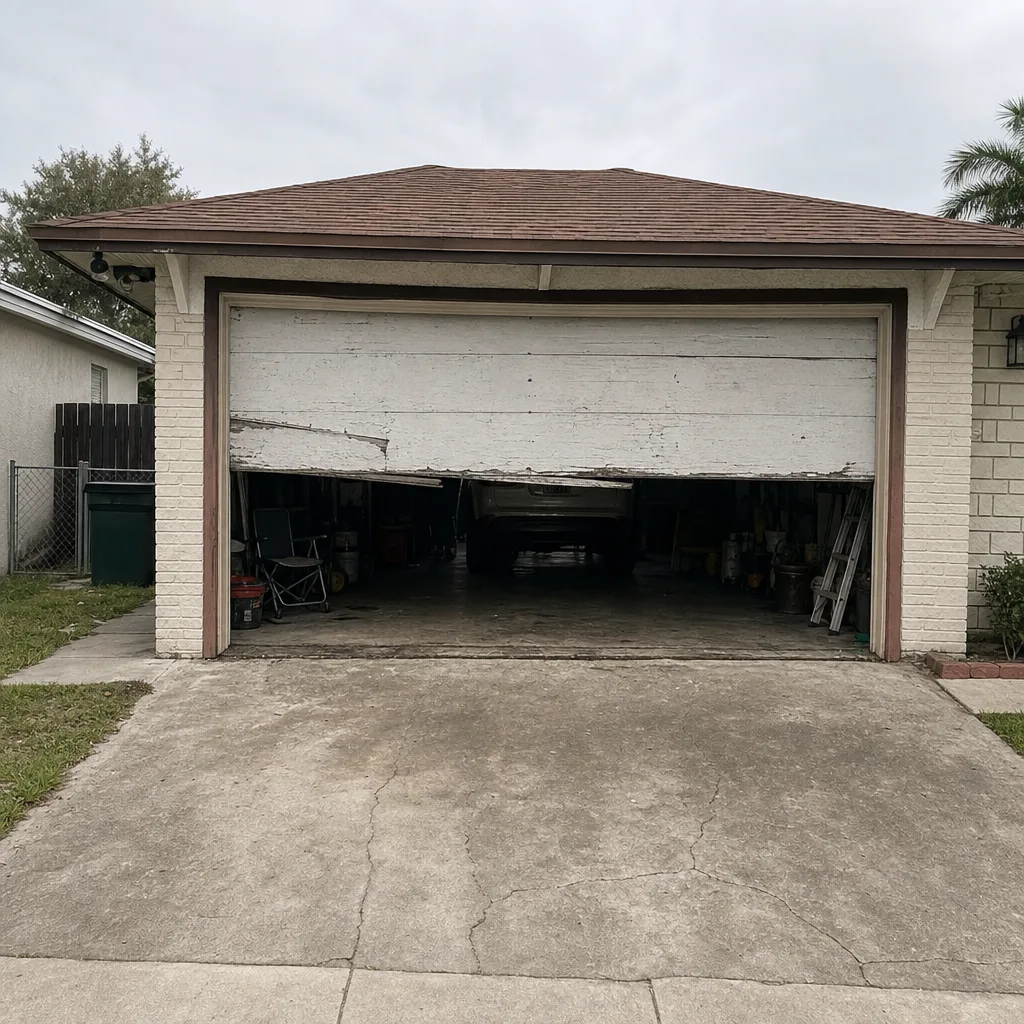 Before
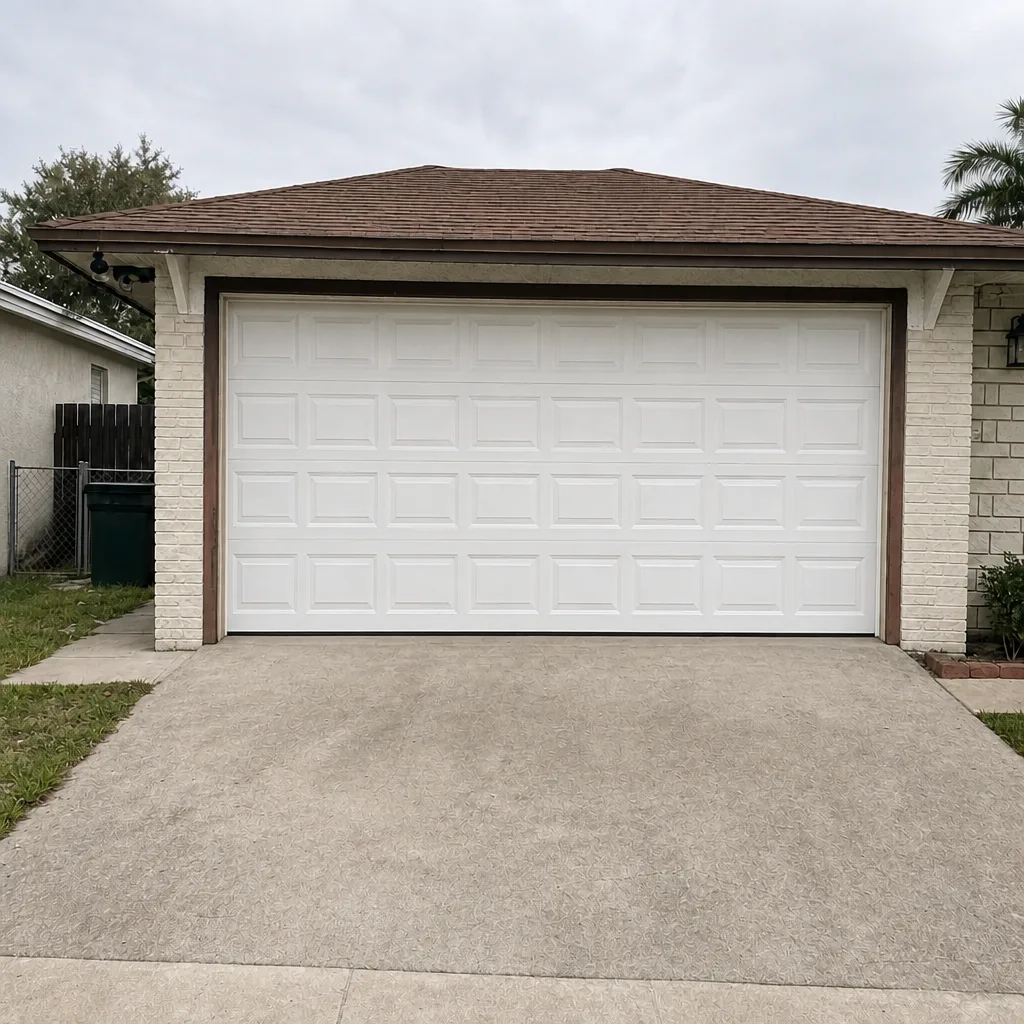 After
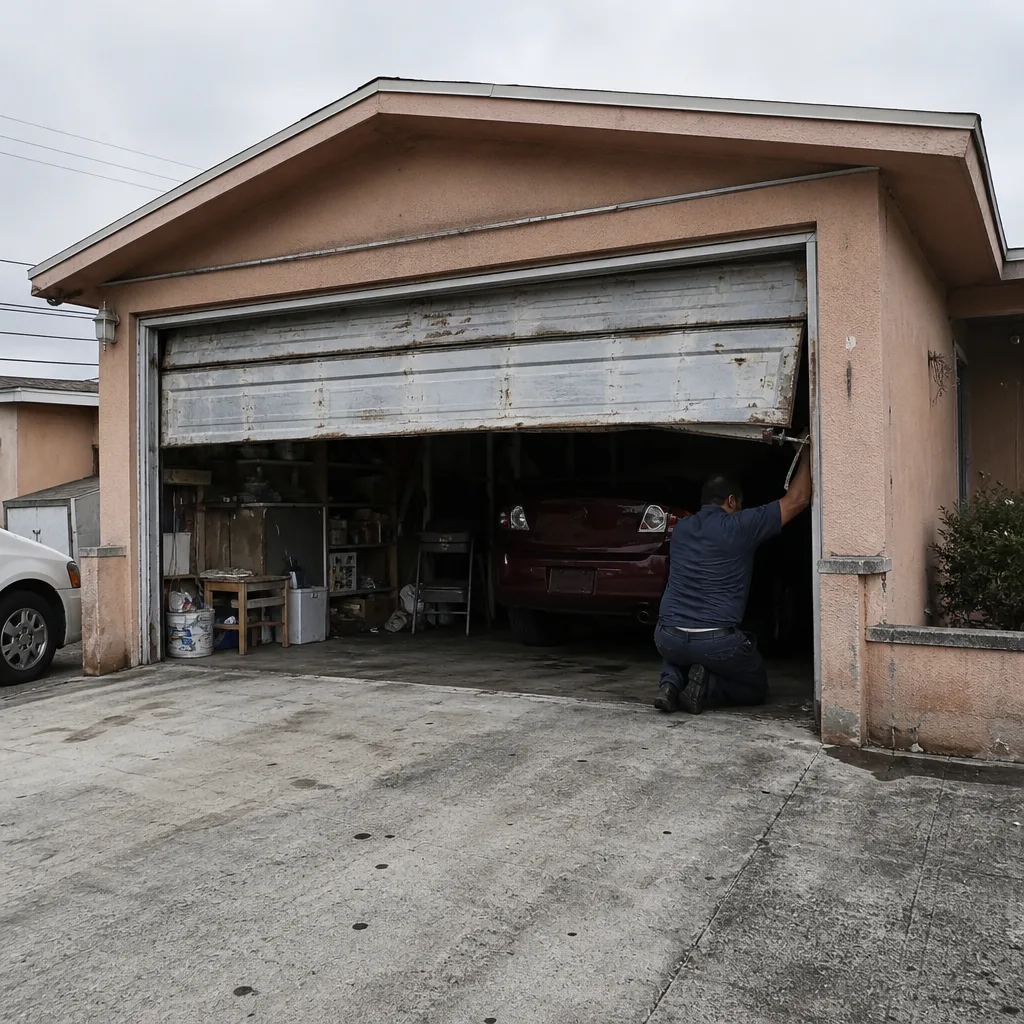 Before
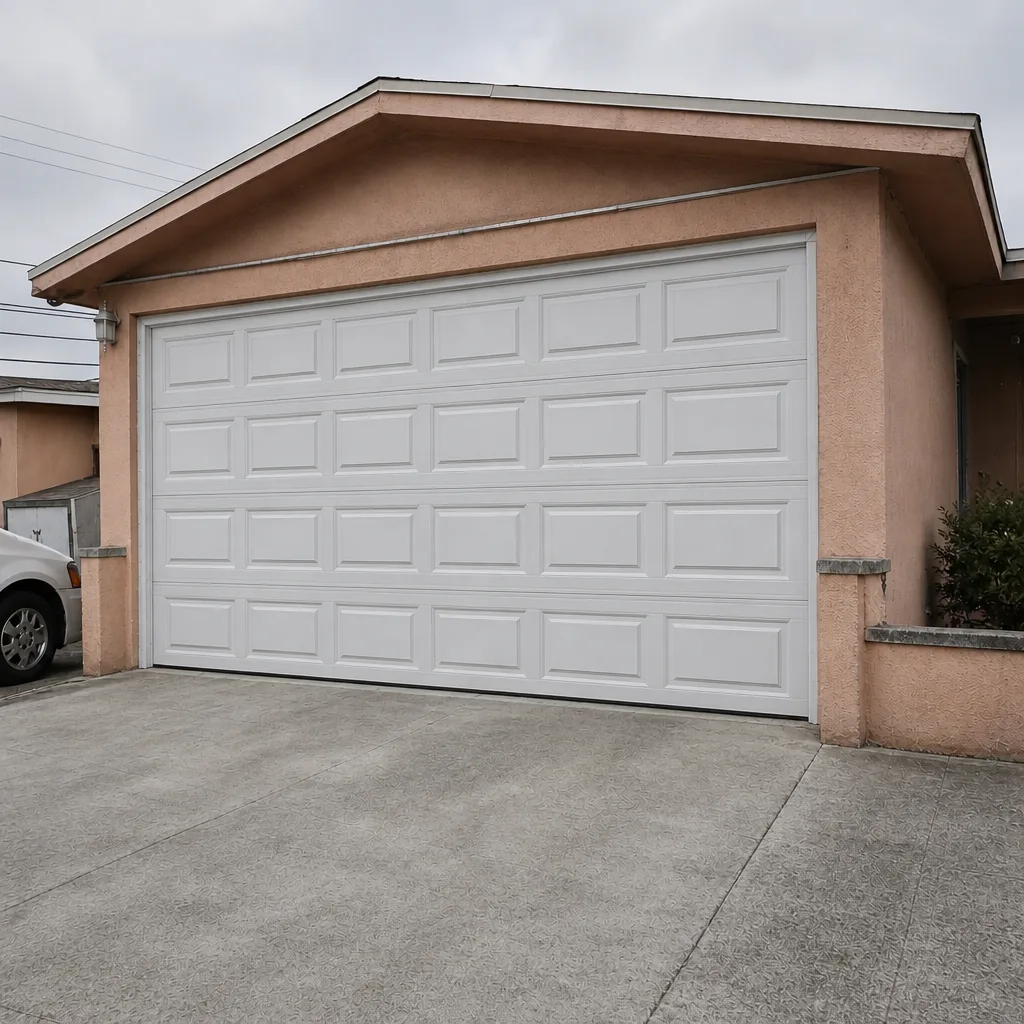 After
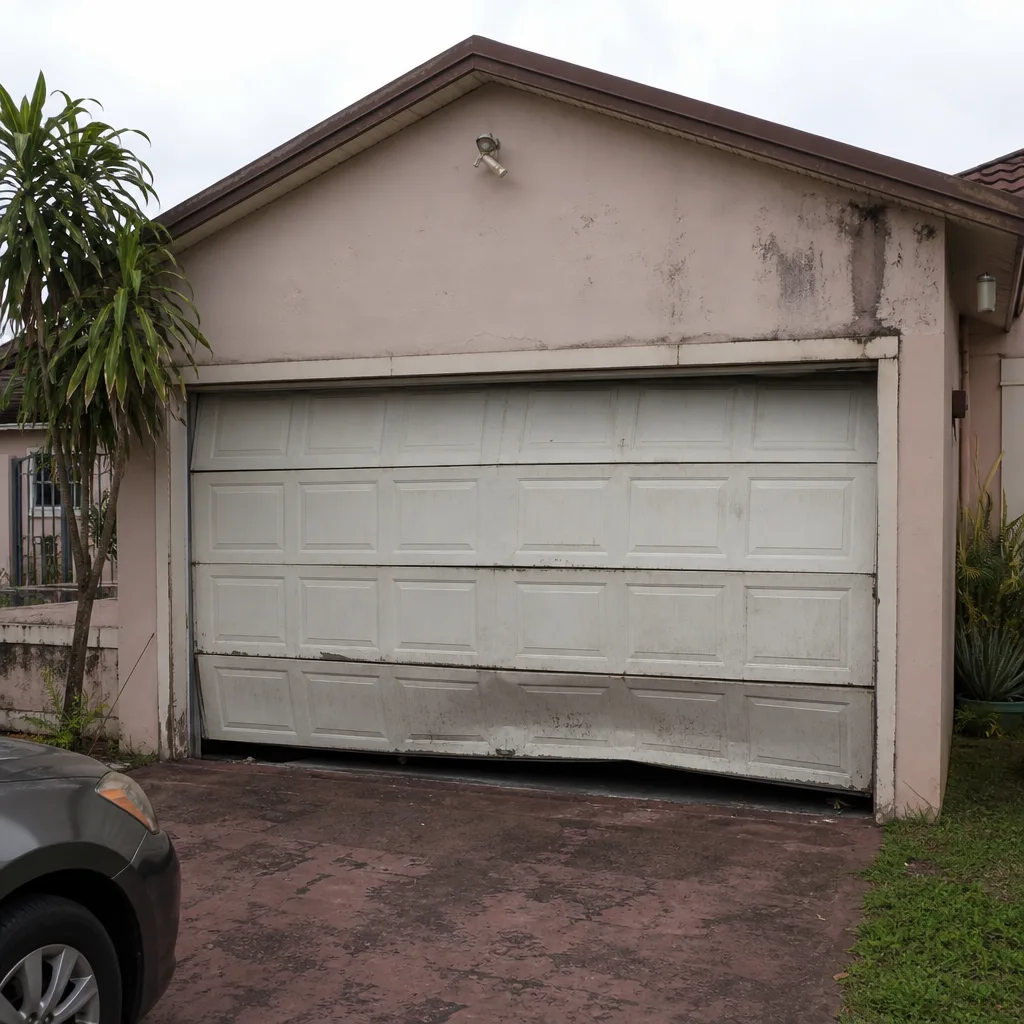 Before
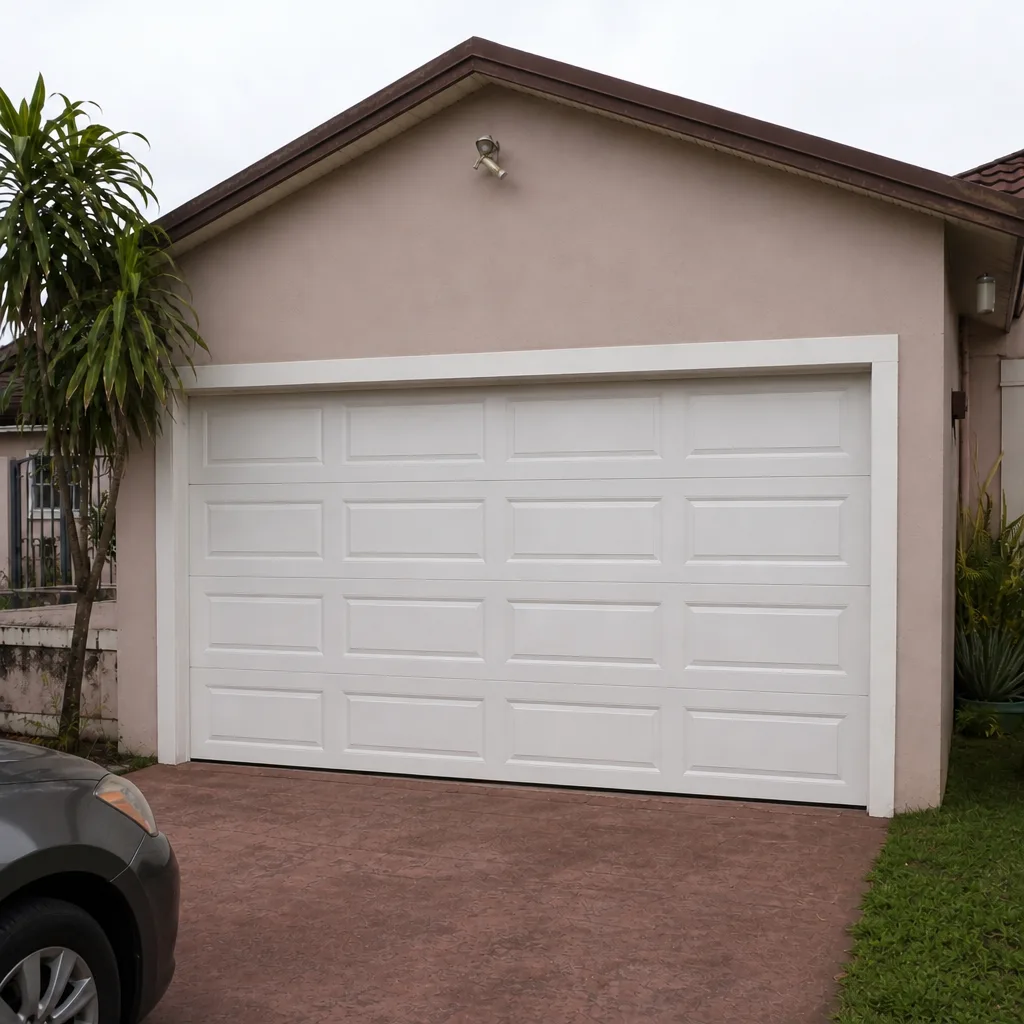 After
When to Call a Professional
Call a professional for anything involving torsion springs, cables, track alignment, or an opener that’s smoking, sparking, or repeatedly reversing. Those are the jobs where the failure mode is an injury or a door coming down on a car, and they’re not improvised repairs. Call for a door that won’t close flush, a door that’s hanging crooked, or a door that’s trapped your vehicle and you can’t get it out with the manual release. And call before hurricane season if your door is sticking, out of balance, or the seal is worn, because the pre-season window is when a routine service call solves a problem that becomes an emergency in August.
Rutherford Garage Door Repair offers free estimates in Hialeah. We work on the major door and opener brands, including LiftMaster, Chamberlain, Genie, and Raynor, and we repair before we recommend replacement. If you’re wondering whether your door needs a repair or a full replacement, the Rutherford Garage Door Repair team can tell you which one makes sense for your equipment. Call (877) 326-5883. We answer 24/7. Fast dispatch from 7am to 7pm, Sunday through Friday.
Frequently Asked Questions
Pull the manual release cord to disengage the opener, then lift the door by hand. If the door lifts easily, you can get the car out and schedule a repair. If it’s heavy or won’t move, don’t force it; the springs or cables may be compromised, and that’s a call to a technician. Call (877) 326-5883 for an exact diagnosis, and estimates are free.
It’s an emergency if the house is open to weather or intruders, a spring or cable has broken and the door is hanging, or a vehicle is trapped and needed. It can wait for the next dispatch window if the door still cycles normally and the house is secure. When in doubt, call and describe the symptoms; we can tell you whether it’s safe to leave the door alone until a technician arrives.
Yes, if the door is balanced and the springs are intact. Pull the manual release cord to disconnect the opener, then lift the door slowly by hand. A properly balanced door lifts with light pressure. If it’s heavy or slams down, stop and call; the springs need service before the door is safe to operate manually. Call (877) 326-5883 to schedule a balance check before storm season.
Secure the opening first, then call. If the door is intact and in its tracks, lower it by hand if the springs allow, engage the manual lock, and call us to get on the schedule. If the door is off its track or a spring has broken, don’t force it; brace the opening from the inside and call. The house being open is the emergency, and our Hialeah team can prioritize that call. Call (877) 326-5883 for the next available dispatch.
It will if the springs, cables, and seal are in good condition before the season starts. The doors that fail during storms are usually the ones that were already marginal in the spring. A pre-season balance check, a seal inspection, and a manual release test in May are the three steps that make the biggest difference. If your door is sticking or out of balance, schedule the repair before June. Call (877) 326-5883 for a free estimate.
Our technicians are experienced garage door specialists, with up to 9 years of experience, and they work exclusively on residential garage doors and openers. We work on the major brands, including LiftMaster, Chamberlain, Genie, Raynor, Clopay, Amarr, Wayne Dalton, and Craftsman. Call (877) 326-5883 to ask about current licensing and insurance documentation for your job; we’ll give you a straight answer before any work is scheduled.
The price depends on what failed and which parts are needed, and it’s set by the written estimate before any work starts. We don’t quote a number over the phone for a repair we haven’t seen, because a broken spring and a bent track are different jobs with different parts. The estimate is free, and the price in writing is the price you pay. Call (877) 326-5883 to schedule.
The Bottom Line
Garage door emergencies in Hialeah split into two categories, and the response is different for each. Mechanical failures get a call to a specialist, a manual release to free the car, and a repair that fixes the actual problem. Storm failures get a plan: test the release in May, check the balance, inspect the seal, and know how to brace the opening if the door fails while the wind is up. The common thread is preparation. A door that’s been tested and serviced before the season is a door you can trust when the season arrives. And if something does fail, call a specialist who works on your brand and can diagnose it without guesswork.
If your garage door is failing, sticking, or you want it checked before hurricane season, call Rutherford Garage Door Repair at (877) 326-5883 for a free estimate. We answer 24/7. Fast dispatch from 7am to 7pm, Sunday through Friday. Whether it’s a mechanical repair, an opener issue, or a new installation, you’re getting a specialist for the whole door system.
Written by the team at Rutherford Garage Door Repair.